
I Spent 16 Years Telling Women Over 60 Their Bladder Problems Were "Just Their Age." I Was Wrong.
A consultant urologist with sixteen years in women's health explains why bladder changes after the menopause don't respond to the usual treatments, and what the published research says is actually going on.

There is a patient I still think about.
Maureen. She was 66 when she finally came to see me.
What struck me wasn't just what she was dealing with.
It was that she had no idea the menopause had anything to do with it.
Her periods had stopped fourteen years earlier.
Nothing dramatic, she said. A few hot flushes, a few bad nights, and then it was over. She felt lucky to have got off so lightly.
The bladder changes didn't start until years later.
By the time she sat in my clinic, she'd been wearing a pad every day for four years.
She knew every toilet in every building she walked into.
She'd stopped going to her aqua aerobics class at the leisure centre.
She hadn't slept through the night in longer than she could remember.
She told me all of this like she was describing the weather.
Like it was just her life now.
That day, I gave her the standard answers. Pelvic floor exercises, a prescription, the usual advice. The same answers her GP had already given her twice.
But after she left, I sat there looking at her notes and found myself asking a question I should have asked much sooner.
Why do so many of my patients over 60 have bladder problems that don't respond the way they should?
I spent the next six months finding out.
The answer changed how I approach bladder problems in these women entirely.
The Post-Menopause Bladder Cascade
The real reason your bladder changed years after your periods stopped, and why it has nothing to do with "just your age".
Here is what the research showed me.
Your bladder is held together by three systems that depend on each other.
When the menopause takes the oestrogen away from all three at once, they don't break down overnight.
They break down slowly, over years, which is exactly why nobody connects it to the menopause.
Your bladder's protective lining, a thin barrier between urine and the raw tissue beneath it, depends on oestrogen to stay intact. It wears a little every day, and your body rebuilds it. That rebuilding runs on oestrogen. When your periods stop, that lining thins. Urine begins touching tissue it was never meant to touch. That creates constant low-grade irritation. The burning "got to go" feeling even when your bladder is barely full. The urgency that wakes you at 3am when there's almost nothing there.
Your bladder's support, the tissue around the bladder and the tube it empties through, depends on the same oestrogen. As it thins, the seal that holds urine under pressure weakens. That's the leak when you sneeze. That's the stress leak that pelvic floor exercises can't fully fix. The muscle isn't lazy. The tissue it works with has changed.
Your bladder's nerve signals, the wires between your bladder and your brain, sit right underneath that thinning lining. With less protection in the way, they misfire. They send emergency signals when your bladder is half-empty. They tell you GO NOW twenty minutes after you just went. They fire in the middle of the night for no reason.
Three systems. All changed by the same drop in oestrogen. All getting worse over time as the body runs out of ways to cope.
That "got to go NOW" feeling isn't a weak bladder. It's a post-menopause cascade. The bladder isn't broken. It's been living without the oestrogen it was built for since the day your periods stopped, and it was never given what it needed to cope.
"My periods stopped at 51. For twelve years I thought the leaking was just my age. Nobody, not my GP, not the consultant, not the nurse at the bladder clinic, ever mentioned the menopause could be connected. Reading this felt like someone finally turned on a light."
Karen D., 63, Leeds✔ Verified UroControl customer
Why Everything You've Tried Has Failed
Pelvic floor exercises strengthen the muscles you can control. They don't rebuild a lining that has thinned, and they don't put back the oestrogen the tissue around your bladder lost. Your bladder isn't getting worse because you stopped squeezing. It's getting worse because the lining and the tissue it depends on changed when your periods stopped, and no amount of squeezing can restore a lining that's wearing thin. That's like tightening the bolts on a bridge while the road surface is crumbling.
Bladder tablets (oxybutynin, tolterodine, solifenacin) block the urgency signal, but don't address the thinning lining or the oestrogen loss driving the entire cascade. When you stop taking them, everything returns, because nothing was restored. And in women over 60, long-term use is associated with faster cognitive decline and a higher risk of dementia. A 2024 study in BMJ Medicine confirmed it. The women most often prescribed these tablets are the ones most vulnerable to their effects on the brain.
Cutting back on drinks makes things worse, not better. Drinking less doesn't reduce how much urine your kidneys produce. They run continuously regardless. What it does is concentrate the urine you do produce, making it more acidic and more irritating to the already thinned lining. A dehydrated, more irritated bladder is not a calmer bladder.
Pads. The average woman with moderate leaks spends £700+ a year. She buys them quietly. Sometimes tucked under the loo roll in the trolley. This is not a solution. This is a subscription to a problem that was never explained to her, a problem with a specific starting point that nobody connected.
The 6 Nutrients That Support a Post-Menopause Bladder
Six months in the clinical literature pointed consistently to six nutrients. Each addresses a different part of the post-menopause bladder cascade. Together, they create the conditions to support the bladder from the inside out.
Pumpkin Seed Extract — Bladder Muscle Strength
A twelve-week placebo-controlled trial in 120 women found night-time trips and urgency dropped by a third, with nine out of ten women reporting improvement. Directly supports the muscle fibres responsible for the seal when you cough, laugh or lift.
Magnesium — Muscle Stabiliser
A landmark study in the British Journal of Obstetrics and Gynaecology found magnesium significantly reduced urgency and night-time frequency. It regulates the calcium channels that control bladder muscle contractions, supporting a calm, voluntary muscle response.
Sodium Hyaluronate — Direct Lining Support
The primary structural component of the bladder's protective inner wall, and what urologists put straight into the bladder in hospital when that lining is damaged. European clinical trials show meaningful improvements in urgency and bladder wall integrity.
Cranberry Extract — Protective Surface Coating
Proanthocyanidins reduce bladder wall inflammation, making the surface less reactive, less irritable, and less prone to the false-alarm signals that create constant urgency with nothing behind them.
Red Clover Extract — Hormonal Environment
Isoflavones that target oestrogen-receptor tissue in the bladder wall and the urethra. Randomised trials show reductions in urgency, frequency and tissue thinning in postmenopausal women. No HRT risks.
Sea Buckthorn — Mucosal Tissue Support
One of the only plant sources of omega-7 fatty acids, critical for the thickness and health of mucosal tissue throughout the urinary tract. Scandinavian research documents meaningful improvement in urogenital mucosal health after consistent supplementation.
The post-menopause bladder cascade involves the lining, the muscle, the nerves and the mucosal tissue, all at the same time. Fixing one while ignoring the others is like patching one wall of a flooding basement. You need all six, at the right doses, at the same time.
What Patients Tell Me After 8 Weeks
Post-purchase survey of 10,000+ customers. Individual results may vary.
"My periods stopped twelve years ago. Twelve years of thinking this was just what getting older felt like. Week three I realised I hadn't mapped out the toilets before leaving the house. I just left. Got in the car, drove to my daughter's. Didn't plan a route around the services. I sat on her drive for a moment when I arrived and thought, when did I stop doing that? Twelve years ago."
Susan B., 67, Bristol✔ Verified
"By 61 I was getting up four times a night. My husband moved into the spare room. After six weeks I was down to once, sometimes not at all. He's back. That sounds like a small thing and it is not a small thing."
Patricia K., 63, Norwich✔ Verified
"I had an accident at my granddaughter's school play. Front row. Nobody saw but I knew. I drove home and cried in the car. Eight months later I haven't missed a single event."
Dorothy K., 63, Sheffield✔ Verified
What to Expect, and When
The most important thing I tell women before they begin: this is a natural supporting process, not a medication that suppresses symptoms. You are supporting tissue that has been living without its oestrogen since your periods stopped, in most cases for years. Results build up over weeks, which is why the full eight-week window matters.
→ Days 1 to 10 The foundation is being laid. Most women notice little yet, which is normal. Magnesium begins calming the bladder nerve signals. Pumpkin seed extract begins reaching the muscle fibres. The building blocks are accumulating.
→ Weeks 2 to 4 The first measurable shift arrives. Women report waking one fewer time at night. Moments of sudden urgency become less frequent and less intense. Several patients describe leaving the house without planning their route around toilets for the first time in years. "I just left," one woman told me. "I didn't think about it."
→ Weeks 5 to 8 The bladder starts reconnecting with daily life. Stress leaks become occasional rather than constant. Women return to activities they had quietly given up: sitting in theatre rows, taking long car journeys, wearing clothes they had stopped feeling safe in. Sleep joins up again. Confidence returns.
→ Week 8 onward The most consistent thing women say is the same thing, phrased differently: they stopped thinking about their bladder. Not managed it. Not worked around it. Stopped thinking about it entirely. For anyone who has spent years planning her life around this problem, that single shift is not a small thing.
So, What Are Your Actual Options?
I want to be direct. There are three realistic paths from here. Only one addresses the problem.
The Formula I Now Recommend
I am not in the habit of recommending specific commercial products. My recommendations are based on research, not relationships. But after reviewing the available formulas against the published literature, there is one I now recommend consistently to my patients whose bladder changed after the menopause.
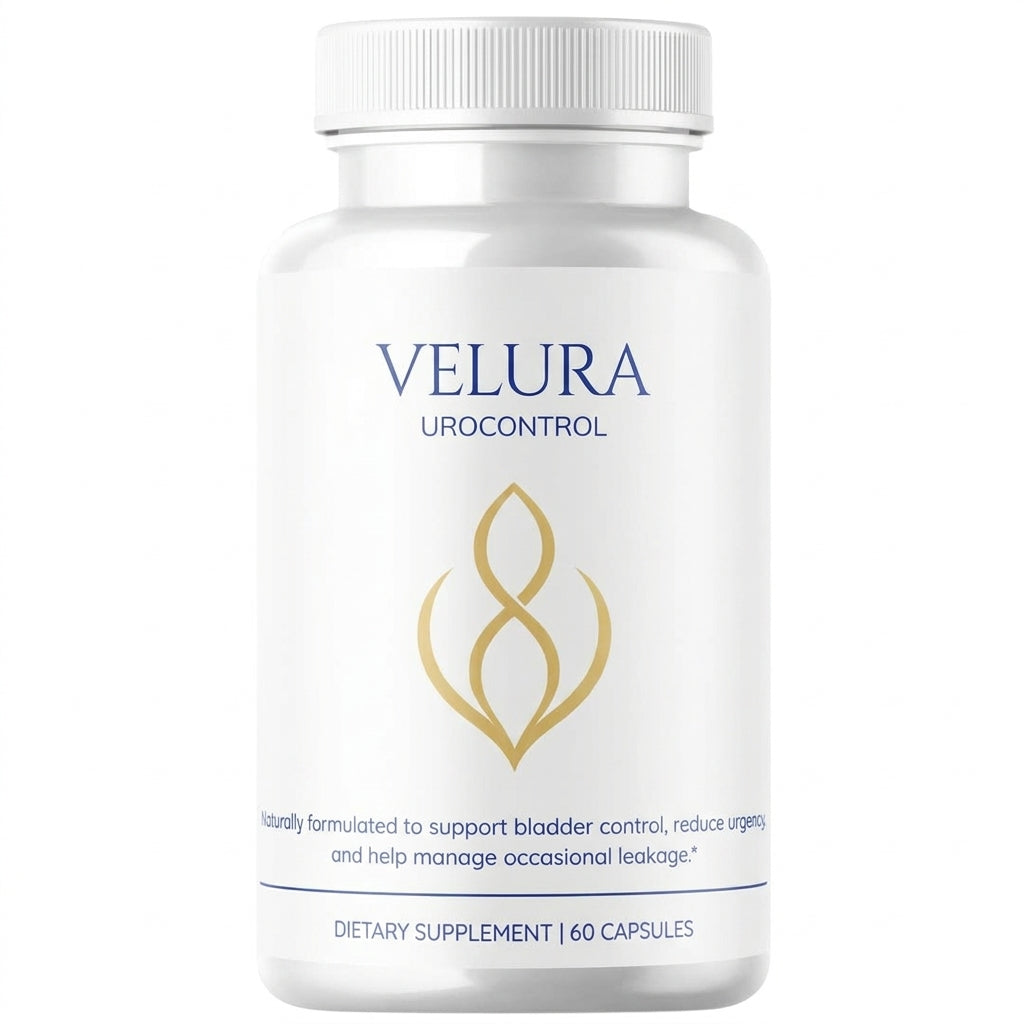
It is called UroControl, made by Velura. Two capsules a day with breakfast. No prescription required. It is the only formula I have found that includes all six nutrients at doses that reflect the research, without fillers or artificial additives. It is backed by a 90-day money-back guarantee, which matters: rebuilding a post-menopause bladder takes time, and women need the full window to experience the effect before making any judgement.
"It is not what getting older feels like. It is what a post-menopause bladder feels like without support. And a bladder that's been given the right nutrients can come back."
Maureen came back seven weeks later. She had gone back to her aqua aerobics class. Not to watch. To swim. She stood in her usual spot beside her friend. She did not get out of the pool once during the session.
She said: "I felt like myself again. Not like someone managing a problem. Like myself."
She asked why nobody had told her this earlier. I gave her the honest answer: there is no financial incentive to explain it. No pharmaceutical company funds awareness of the bladder lining after the menopause. The research exists, it has for years, but it lives in journals that most GPs never read, and it doesn't fit into a ten-minute appointment.
So women go on buying pads. Cancelling plans. Waking at 3am. Watching their lives get smaller, year by year, because they have been told this is simply what getting older feels like.
It isn't. It's what the menopause can do to a bladder that was never given the support it needed afterwards.
You did not work this hard, for this long, to spend the rest of your life planning around a toilet. Go on and get your freedom and your life back.